How to Prepare Your Queens Home for Bed Bug Treatment — What to Do and What Not to Do
Heat treatment prep and chemical treatment prep have different requirements. Skipping preparation steps is the leading cause of treatment failure in Queens apartments.
Quick Answer
Preparing your Queens home for bed bug treatment requires stripping all bedding and washing it on high heat, clearing 18 inches of space around all furniture, and removing items from closets. Heat treatment prep and chemical treatment prep have different requirements. Clutter on floors is the single most common factor that causes treatment failure in Queens apartments.
Preparation is not optional. It is the part of bed bug treatment that residents control, and it is the part that most often determines whether the treatment works the first time or requires an additional visit. In Queens apartments — particularly the dense, smaller-unit buildings that dominate neighborhoods like Rego Park, Woodside, and Sunnyside — preparation in a confined space requires planning.
This guide covers what to do before heat treatment and chemical treatment separately, because the requirements differ in important ways. It also covers the most common mistakes Queens residents make that cause treatment to underperform.
Heat Treatment Preparation — What to Do
Remove Heat-Sensitive Items
Before heat treatment, remove these items from the treatment area:
- Aerosol cans — hairspray, deodorant, cleaning sprays — which can rupture at high temperatures
- Candles — all types, including soy and beeswax
- Live plants and fresh-cut flowers
- Certain medications, particularly those with storage temperature requirements — check the label or ask your pharmacist
- Lithium batteries not installed in devices — loose batteries, spare backup batteries
- Pressurized containers including CO2 cartridges and camping fuel
- Artwork with heat-sensitive components including certain prints, photographs, and adhesives
Do Not Move Your Bedding or Clothing Out
This is the step that surprises most Queens residents. For heat treatment, leave your clothing in drawers and your bedding on the bed. Heat penetrates fabric folds. Removing clothing into bags and storing them in rooms being treated is actually better, not worse. What you should NOT do is move clothing or bedding to rooms outside the treatment area — doing so risks carrying bed bugs to untreated rooms and undoing the treatment.
Clear the Floor Around Furniture
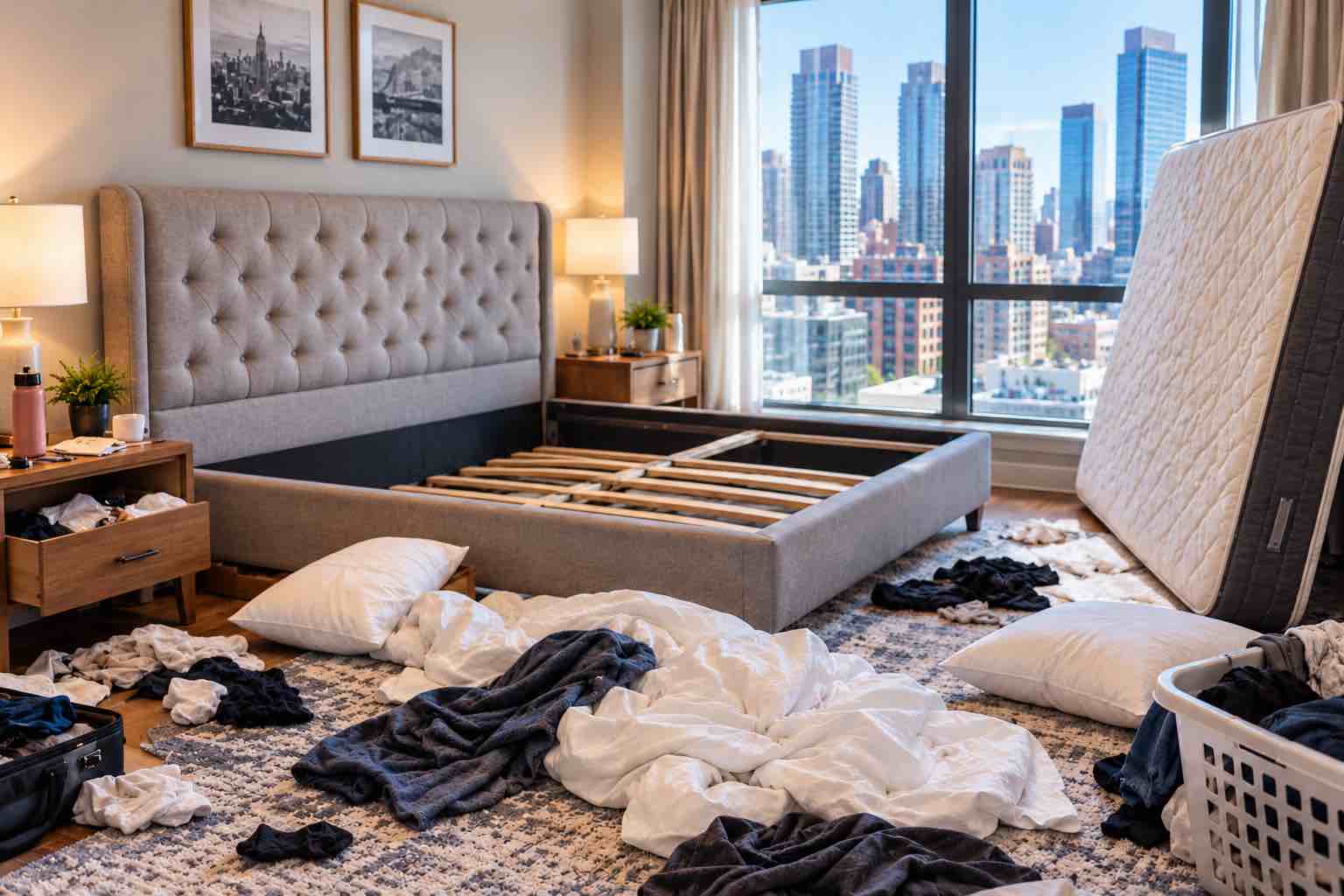
Create 18 inches of clear floor space around all beds, sofas, and upholstered chairs. Boxes, bags, and piles of belongings against walls block heat circulation and create cool zones where bed bugs can survive. In small Queens apartments where storage space is limited, this step requires planning the day before treatment.
Open All Interior Doors and Drawers
Closet doors, cabinet doors, and dresser drawers should all be open before technicians arrive. This allows heat to penetrate these spaces without the closed-door barrier creating a thermal shadow.
Remove Pets and Children
All people, pets, and plants must leave for the full treatment window. In Queens apartments where a neighbor or family member can host temporarily, arrange this in advance. Most Queens heat treatments run 8 to 10 hours from arrival to clearance.
Chemical Treatment Preparation — What to Do
Strip All Bedding and Launder on High Heat
Strip all bedding — sheets, pillowcases, mattress pads, blankets, and duvet covers — and launder immediately before treatment on the hottest washer setting, then dry on the highest heat setting for at least 30 minutes. Seal the laundered bedding in bags until treatment is complete. Do not place it back on the bed until the technician confirms it is safe to do so.
Empty Closets and Dressers Onto the Bed in Bags
For chemical treatment, clothing from closets and dresser drawers in the bedroom should be removed and placed in sealed bags or bins. Label them clean and store them in an unaffected room. This allows the technician to treat the inside of closets and dresser drawer frames where bed bugs harbor.
Clear 18 Inches Around All Furniture
Same as heat treatment — create clear access around beds, sofas, and upholstered chairs. The chemical needs to reach baseboards and floor edges, which are primary travel paths.
Vacuum Thoroughly, Then Discard the Bag
Vacuum all carpets, area rugs, and upholstered furniture immediately before chemical treatment. After vacuuming, seal the vacuum bag in a plastic bag and discard it in an outdoor trash container. Do not leave the bag inside — bed bugs and eggs in the bag will survive and continue to develop.
Arrange Childcare and Pet Care for 4 to 6 Hours
Chemical treatment requires a minimum 4-hour re-entry period. In Queens apartments with pets, fish tanks must be covered with a plastic bag and the air pump disconnected during treatment. Confirm re-entry timing with the technician before they begin.
What Not to Do — Common Mistakes That Cause Treatment Failure
Do Not Throw Away Your Mattress Before Treatment
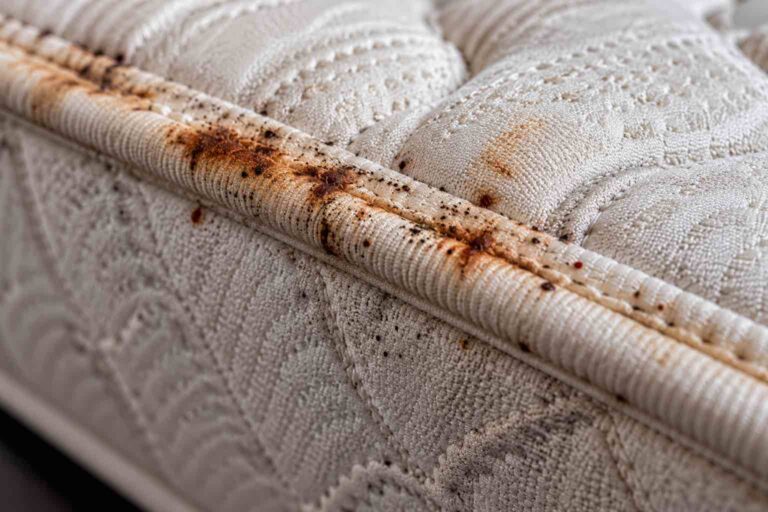
Moving an infested mattress through your Queens apartment building hallway spreads bed bugs to common areas and potentially to neighboring units. A mattress is not the source of the infestation — it is just a harborage site. Heat treatment eliminates bed bugs in the mattress along with everything else in the treatment area. Discard it after a confirmed successful treatment if you choose, but not before.
Do Not Move Items from Infested Rooms to Uninfested Rooms
Carrying belongings from the bedroom to the living room before treatment is a common mistake in Queens apartments where residents want to protect their things. It spreads the infestation. Anything moved from an infested room is potentially infested. Leave items in place unless specifically instructed to move them.
Do Not Clutter the Floor
Boxes of books, bags of clothing, stacks of shoes, and other floor-level clutter block treatment in both heat and chemical protocols. In a smaller Queens apartment where storage is tight, this step takes real effort. It is worth doing. Floor-level clutter is the single most cited cause of treatment failure in Queens apartments.
Do Not Use DIY Sprays Before a Professional Treatment
Over-the-counter bed bug sprays do not eliminate infestations. Worse, they can cause bed bugs to scatter into untreated areas of the apartment, making the infestation harder to find and treat. If you have a professional treatment scheduled, stop any DIY treatment at least 5 days before the professional visit.
Preparation Questions from Queens Residents
In a studio, all living spaces are in the treatment area, so preparation requires a single focused session rather than room-by-room logistics. The key challenge in Queens studios is creating the 18-inch floor clearance around the bed and sofa in a limited space. Pack bags tightly and store them in the bathroom, hallway, or with a neighbor for the treatment day. Your technician will walk through specific prep adjustments for your layout at the inspection visit.
For heat treatment, fish must be removed from the space entirely. Fish cannot survive the treatment temperatures. For chemical treatment, cover the tank with a plastic bag sealed around the rim and disconnect the air pump for the duration of the treatment. After the re-entry period, remove the plastic cover and restart the pump. Tell the technician about your fish tank before treatment begins so the appropriate product selection can be confirmed.
Common area preparation is the responsibility of building management, not individual tenants. If treatment is being extended to common areas of your Queens building, the property manager or building super handles preparation logistics for those spaces. You are responsible only for your unit. If you are a Queens landlord coordinating building-wide treatment, call (516) 925-5160 to discuss logistics for multi-unit preparation.